Test a digital product idea by finding people with the problem, presenting a specific offer, and asking for payment before full development. Good digital product validation replaces assumptions with evidence of commitment.
Likes and encouraging comments can feel promising, but they don’t prove demand. Validation reduces uncertainty; it doesn’t guarantee success. Start by defining what customers must do for your idea to earn further investment.
Key Takeaways
- Use this validation process to define one target audience, one painful problem, and a clear outcome before choosing features.
- Use user interviews to ask potential buyers about recent behavior, existing workarounds, and actual spending rather than hypothetical interest.
- Build a pre-launch list with a focused offer page, then use preorders or paid pilots to test willingness to pay.
- Separate demand testing from usability testing; a usable product can still lack buyers.
- Set decision rules before collecting results, then decide whether to build an MVP, pivot, or stop. Include acquisition costs, refunds, and delivery effort.
1. Define Your Digital Product Validation Test
Write down who has the problem, when it occurs, and what improvement they’re buying. A course needs a learning outcome. A template should remove work. Software needs a repeatable job worth paying to complete.
Next, use Lumi’s 60-second reality check. Name three specific users experiencing these exact pain points, confirm they’ve tried solving them, and check whether they’d pay today. Uncertain answers highlight assumptions that need investigation.
Tanya Aliza’s validation framework adds helpful depth:
- Is the problem painful and urgent?
- Are people already spending money on it?
- Can you deliver a clear before-and-after transformation?
- Have you helped someone achieve it before?
Demand failure is common. CB Insights’ startup failure analyses show that an earlier study found no market need in 35% of the failed startups examined.
For structured thinking, Lumi suggests three free AI tools: the 5 Why’s Analysis, validation ideation, and the User Story Health Check. Validation ideation can help surface assumptions and map them in an 8 to 15-minute session. Use these tools as a starting point for validation, and treat AI outputs as hypotheses rather than customer evidence.
2. Research Demand and Interview Potential Buyers
Look for existing spending and repeated complaints
Use market research tools such as Google Trends search interest to examine seasonality and regional interest. Semrush can reveal search demand and competing pages, while Similarweb estimates website traffic. Utility Agency recommends these tools for demand research.
Search activity alone doesn’t establish validation or purchase intent. Compare search activity with competitor offers and recurring complaints as part of your market research. Read competing product reviews, support discussions, and community posts. Record recurring complaints, existing prices, and tolerated workarounds.
Competitors demonstrate that a category attracts spending. Your research still needs to establish why a specific group would switch.
Ask about the last time the problem happened
When conducting user interviews, recruit people who fit your proposed customer group, including people outside your friends and followers. Relevant professional communities and direct outreach can work, provided you respect their rules.
Use this short script to keep user interviews focused:
“Tell me about the last time this happened. What did you do? What did that cost in money or time? Who decides whether to buy a solution?”
Avoid pitching until you’ve thoroughly understood the problem. “Would you use my app?” invites politeness and guesses.
Useful evidence includes recent incidents, paid alternatives, and repeated attempts to solve the same issue. Record user feedback about these experiences. Several consistent interviews can reveal patterns, but a small, self-selected sample doesn’t establish market size.
Also ask what works well today. Otherwise, confirmation bias can turn every complaint into supposed demand for your idea.
3. Test a Specific Offer With a Landing Page
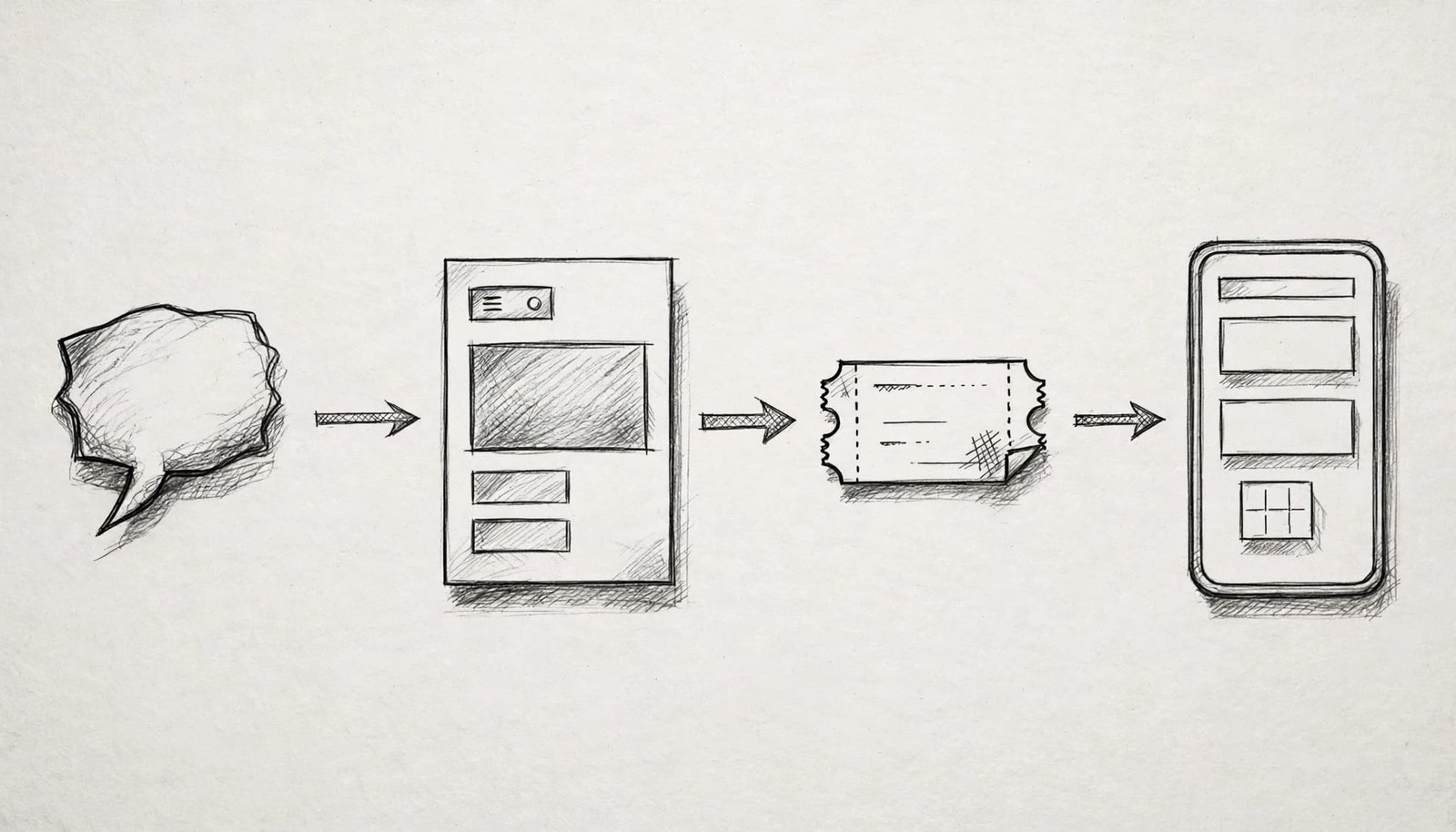
Build one landing page stating the intended buyer, promised outcome, proposed price, and next step. SYSTEME is enough. Don’t build an entire brand before testing the offer.
For a course, describe the skill customers will gain. For a template, show a useful preview. For SaaS, explain the workflow it improves.
Send relevant traffic through permission-based community posts, targeted outreach, or a capped advertising test. Record the source because friends, cold visitors, and existing subscribers behave differently.
A pre-launch list measures interest, not willingness to pay. Ask people on your pre-launch list a qualifying question about their current problem, then invite interested subscribers from that pre-launch list to a paid pre-sale offer.
Wandering Aim Fully warns that followers and friendly messages aren’t product validation, using a “99.9%” claim about those signals failing to produce sales. Don’t treat that figure as a measured conversion benchmark.
For a specific feature, a fake door test measures clicks on an offer before the feature exists. This test can provide validation of feature interest, but clicks don’t prove visitors will pay. After the click, clearly disclose the feature’s status and offer an optional notification signup. Never imply that an unavailable product is ready.
4. Ask for Payment Before Full Development With a Pre-Sale
Run a transparent pre-sale
A structured pre-sale tests whether someone accepts your outcome, price, and delivery terms. Explain what’s included, what’s unfinished, the delivery date, and how cancellations and refunds work.
Wandering Aim Fully recommends a five-day pre-sale with a discount and one sales email each day. Send these emails to your opted-in pre-launch list, with useful details about the offer rather than repeated pressure.
Upfront payments can fund development, but a pre-sale also creates obligations. Keep enough money available for refunds and fulfillment. If you don’t reach your target, explain what happens before collecting payment.
For an existing MVP, an early-bird discount can support a pre-order that tests paid adoption. Avoid discounts so steep that they hide resistance to your intended price.
Set a financial threshold before launching
Use a small test budget with explicit economics. At a proposed $49 price, ten orders produce $490 in gross revenue.
Set a pre-sale target of ten paid orders from 200 qualified landing-page visitors within seven days. That requires a 5% purchase rate. If acquisition spending is capped at $100, ten orders imply a $10 acquisition cost per customer.
Treat these proposed decision rules for validation as test thresholds, not industry benchmarks. Adjust them to your delivery costs and business model before testing.
The remaining $390 isn’t profit: fees, refunds, taxes, and your delivery time still matter. A successful pre-sale must support a viable product, not merely generate transactions.
5. Test Usability and Deliver the Outcome Manually
Use mockups to test the core task
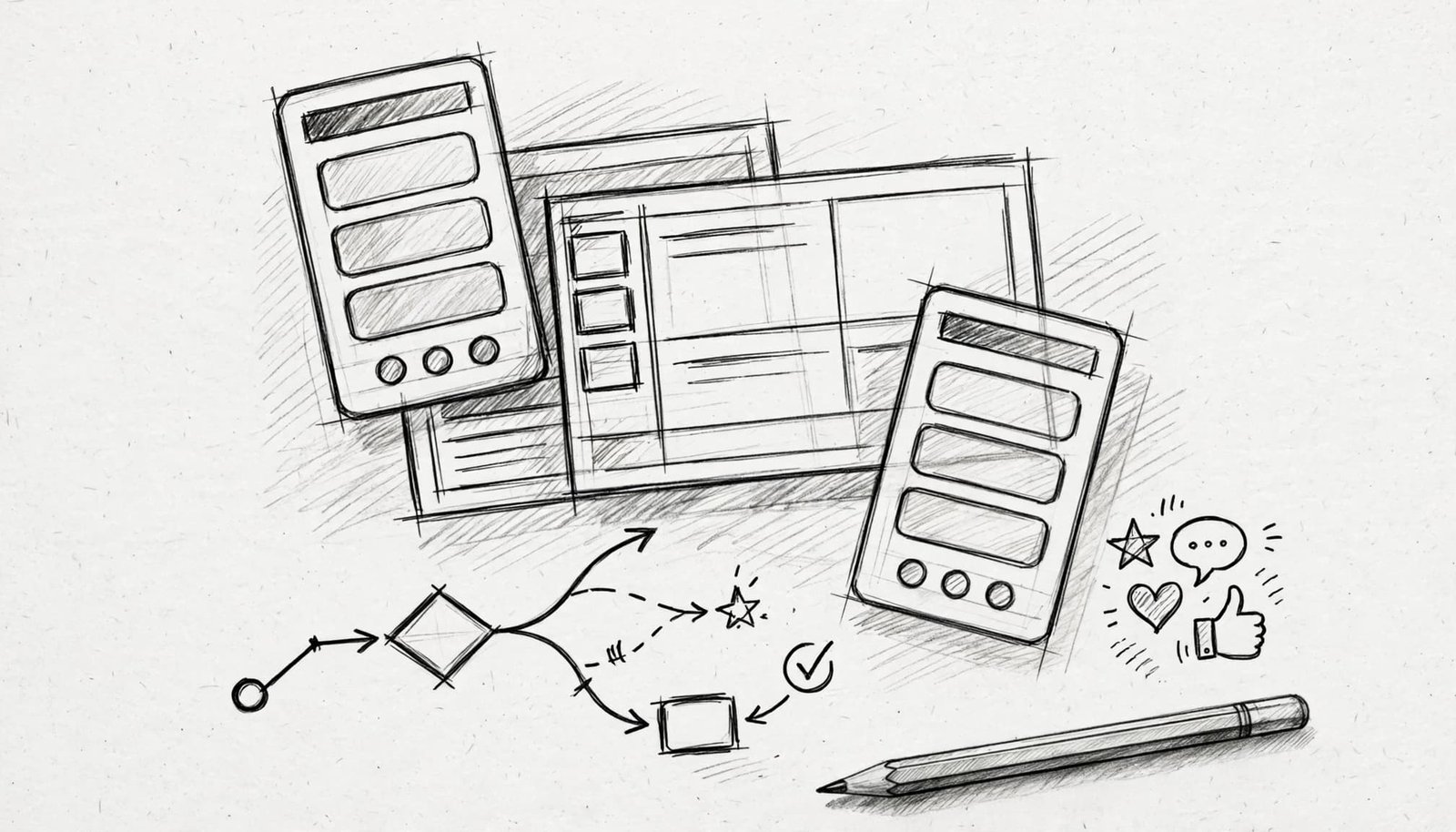
Once demand looks credible, create a clickable Figma prototype. Utility Agency also lists InVision and Adobe XD, but those are legacy recommendations: InVision discontinued its design collaboration services, and Adobe XD entered maintenance mode.
Run usability testing by asking participants to complete one realistic task without coaching. During usability testing, observe hesitation, wrong turns, and failures. A polished mockup doesn’t validate demand. This validation tests whether people understand the proposed solution.
Pendo’s product validation guide describes Slack’s pre-launch user interviews and focus groups as evidence for centralized, searchable team communication. It contrasts that research with Google Glass’s internally driven development and limited user testing before its initial consumer offering was withdrawn.
Sell the result before automating delivery
A concierge experiment delivers the promised outcome manually. Run a course as a live workshop before recording lessons. For software, perform the underlying service yourself with spreadsheets and email.
Be transparent about manual work. Charge for the outcome, record delivery time, collect direct user feedback to uncover workflow friction, and observe whether customers return. A no-code workflow using forms, Airtable, and Zapier can test the process without custom engineering.
This separates a valuable result from assumptions about automation. However, manual delivery doesn’t prove the eventual software will be economical.
When functioning mobile software exists, use Apple’s TestFlight beta testing for iOS or Google Play’s testing tracks for Android. Run beta testing through structured tracks to check technical stability under real usage. Beta testing checks functionality, not initial market demand, so it can’t replace early demand research.
6. Decide Whether to Build, Pivot, or Stop
Compare results with the validation rules you wrote before launching. Don’t lower the target because you’ve become attached to the idea.
Use this decision framework after your paid test.
| Decision | Evidence | Next move |
|---|---|---|
| Build a narrow MVP | Qualified customers pay, receive value, and economics look workable. | Deliver the smallest complete outcome. |
| Pivot one assumption | The problem is real, but the offer, audience, or price underperforms. | Change one variable and retest. |
| Stop this version | Suitable buyers show little urgency or commitment after credible tests. | End the experiment and preserve resources. |
A missed target needs diagnosis. Low clicks can indicate weak positioning or poor traffic. Checkout abandonment can expose pricing or trust problems. Refunds after delivery point to a promise or outcome mismatch.
Keep a simple evidence log with visitor sources, interviews, paid orders, cancellations, refunds, and delivery hours. This prevents selective memory from turning mixed results into a success story.
Analyze conversions from your pre-launch list alongside qualitative evidence.
After launching an MVP, track User Activation Rate, Retention Rate, Drop-off Points, and Feature Engagement. Define activation as the first useful outcome, and measure retention around the product’s natural usage cycle. Pair these metrics with user feedback to learn why people drop off.
A paid signup validates an initial purchase decision. Continued use and renewal provide different evidence about lasting value.
Product validation continues after launch. One successful campaign doesn’t establish product-market fit, especially when sales depend on personal relationships or heavy discounts.
Frequently Asked Questions
What is digital product validation?
Digital product validation tests whether a specific group has a problem and will pay for a proposed outcome. This validation replaces assumptions with evidence, but it doesn’t guarantee success.
How can I test demand and willingness to pay before building a digital product?
Interview potential buyers about recent problems, existing workarounds, and what they already spend. Then make a pre-sale offer with a clear outcome and price, and measure paid orders rather than likes or hypothetical interest.
Does a pre-launch list prove that people will buy?
A pre-launch list measures interest, not willingness to pay. Invite qualified subscribers to a paid offer to test whether they accept the price and delivery terms.
How do I decide whether to build, pivot, or stop?
Compare the results with decision rules you set before the test, including paid orders, acquisition costs, refunds, and delivery effort. Build a narrow MVP when the evidence and economics look workable. Change one assumption and retest when the problem is real but the offer underperforms, using user feedback to guide your changes. Stop if suitable buyers show little commitment.
Conclusion: Earn the Next Investment
Strong product validation for a digital product idea connects a recurring problem with a paid commitment and a useful outcome. Each test should earn the next investment of time or money.
Start with customer conversations, then put a priced offer in front of qualified buyers. A pre-sale tests whether they’re willing to pay. Build only enough to test the next unresolved assumption.
Your goal is better evidence, not certainty. Validation can’t guarantee success, but a small experiment that changes your mind can save more than an enthusiastic launch.
If you’re not sure where to begin, define your target audience and talk to a few potential buyers. I call this validation ideation: shaping an offer through early customer research. Offer a simple pre-order before you build a full minimum viable product. My validation ideation process uses buyer responses to decide what to test next. When you’re ready to turn a validated idea into a working system, the tools and training I use are listed on my Resources page.
Pingback: How to Create a Digital Product: 7 Easy Steps For Beginners